Kitchen unit converter
1 cup is
16 tbsp
The same amount in
- 48 tsp
- 8 fl oz
- ½ pint
- ¼ quart
- 1/16 gallon
- 237 ml
- 0.24 L
Type an amount as a number (1, 1.5, 3/4 or 1 1/2), pick what you have and what you need, and the answer comes with the easiest way to measure it and the same amount in every other unit. Going between cups and grams or ounces of weight? Pick the ingredient, because a cup of flour and a cup of sugar weigh very different amounts.
The short answer
- 3 teaspoons make 1 tablespoon, 16 tablespoons make 1 cup, and 1 cup is 8 fluid ounces. 2 cups make a pint, 4 cups a quart and 16 cups a gallon.
- 1 pound is 16 ounces (about 454 grams), and a stick of butter is 8 tablespoons, ½ cup or 113 grams.
- Fluid ounces measure volume and ounces measure weight: a cup is always 8 fluid ounces, but a cup of all-purpose flour weighs 4¼ ounces (120 g) and a cup of sugar 7 ounces (198 g), according to King Arthur Baking.
Kitchen conversion chart
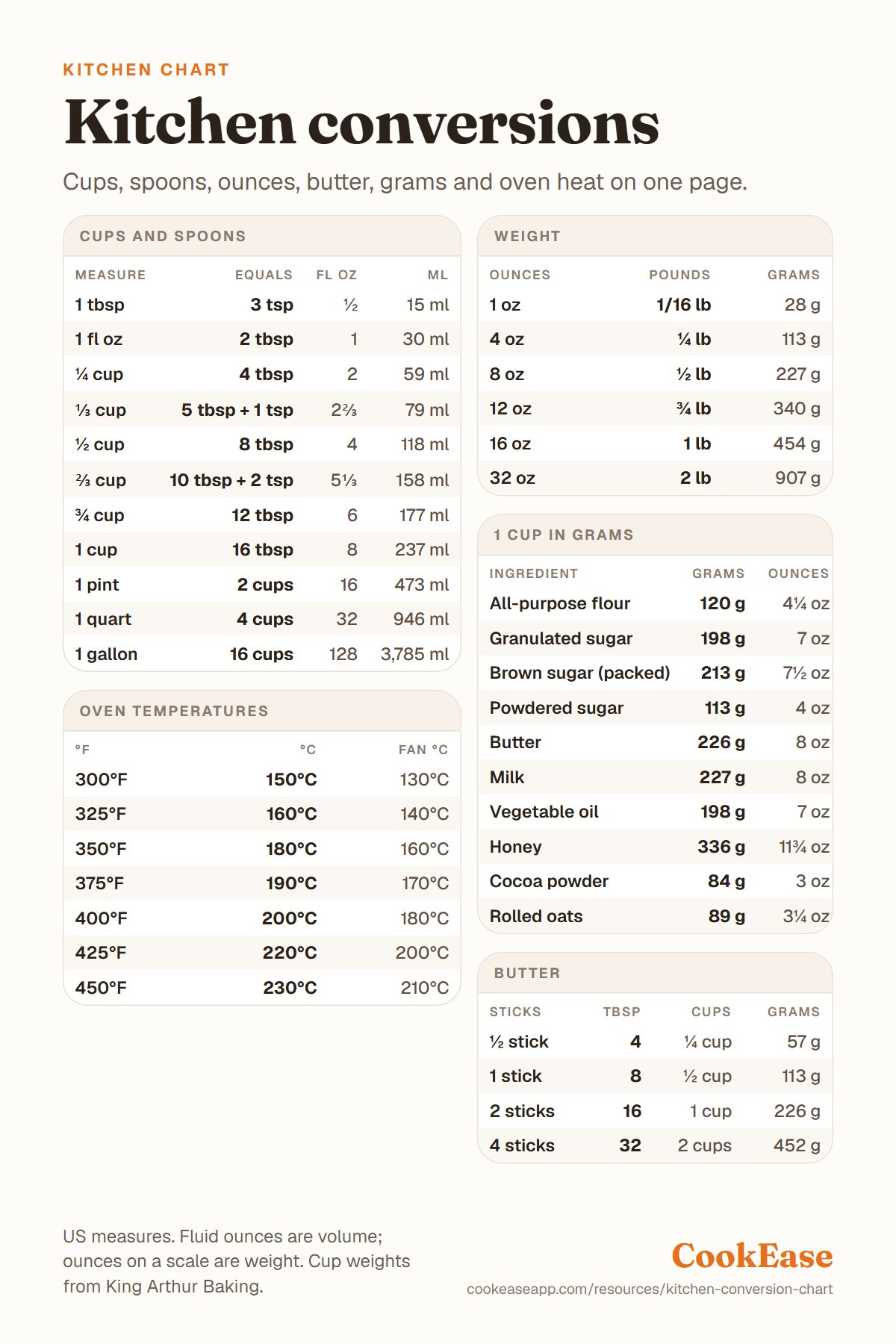
The conversions a recipe asks for most, in one place: cups and spoons with their fluid ounces and milliliters, weights, butter, what a cup of the everyday baking ingredients weighs, and oven temperatures. Every number comes from the same table as the converter above, so the two always agree.
| Measure | Equals | Fl oz | Ml |
|---|---|---|---|
| 1 tbsp | 3 tsp | ½ | 15 ml |
| 1 fl oz | 2 tbsp | 1 | 30 ml |
| ¼ cup | 4 tbsp | 2 | 59 ml |
| ⅓ cup | 5 tbsp + 1 tsp | 2⅔ | 79 ml |
| ½ cup | 8 tbsp | 4 | 118 ml |
| ⅔ cup | 10 tbsp + 2 tsp | 5⅓ | 158 ml |
| ¾ cup | 12 tbsp | 6 | 177 ml |
| 1 cup | 16 tbsp | 8 | 237 ml |
| 1 pint | 2 cups | 16 | 473 ml |
| 1 quart | 4 cups | 32 | 946 ml |
| 1 gallon | 16 cups | 128 | 3,785 ml |
| Ounces | Pounds | Grams |
|---|---|---|
| 1 oz | 1/16 lb | 28 g |
| 4 oz | ¼ lb | 113 g |
| 8 oz | ½ lb | 227 g |
| 12 oz | ¾ lb | 340 g |
| 16 oz | 1 lb | 454 g |
| 32 oz | 2 lb | 907 g |
| Sticks | Tbsp | Cups | Grams |
|---|---|---|---|
| ½ stick | 4 | ¼ cup | 57 g |
| 1 stick | 8 | ½ cup | 113 g |
| 2 sticks | 16 | 1 cup | 226 g |
| 4 sticks | 32 | 2 cups | 452 g |
| Ingredient | Grams | Ounces |
|---|---|---|
| All-purpose flour | 120 g | 4¼ oz |
| Granulated sugar | 198 g | 7 oz |
| Brown sugar (packed) | 213 g | 7½ oz |
| Powdered sugar | 113 g | 4 oz |
| Butter | 226 g | 8 oz |
| Milk | 227 g | 8 oz |
| Vegetable oil | 198 g | 7 oz |
| Honey | 336 g | 11¾ oz |
| Cocoa powder | 84 g | 3 oz |
| Rolled oats | 89 g | 3¼ oz |
| °F | °C | Fan °C |
|---|---|---|
| 300°F | 150°C | 130°C |
| 325°F | 160°C | 140°C |
| 350°F | 180°C | 160°C |
| 375°F | 190°C | 170°C |
| 400°F | 200°C | 180°C |
| 425°F | 220°C | 200°C |
| 450°F | 230°C | 210°C |
Printable conversion chart
The whole chart on one page, sized to print on a letter or A4 sheet. Tape it inside a cabinet door or on the fridge and you will not need your phone with flour on your hands. You can also download the picture or save it to Pinterest.
The conversions people look up most
Each of these has its own page with the answer, a chart for nearby amounts, the converter set to that question, and the questions that usually come next.
- How Many Ounces in a Cup?There are 8 fluid ounces in 1 cup.
- How Many Ounces in a Pound?There are 16 ounces in 1 pound, which is about 454 grams.
- How Many Cups in a Quart?There are 4 cups in 1 quart.
- How Many Teaspoons in a Tablespoon?There are 3 teaspoons in 1 tablespoon.
- How Many Cups in a Gallon?There are 16 cups in 1 gallon.
- How Many Tablespoons in ¼ Cup?There are 4 tablespoons in ¼ cup.
- How Many Tablespoons in a Cup?There are 16 tablespoons in 1 cup.
- How Many Cups in a Pint?There are 2 cups in 1 pint.
- How Many Tablespoons in an Ounce?There are 2 tablespoons in 1 fluid ounce.
- How Many Grams in a Cup?A cup is volume and grams are weight, so the answer depends on what is in the cup.
- How Many Tablespoons in a Stick of Butter?There are 8 tablespoons in a stick of butter.
- Sticks of Butter to CupsOne stick of butter is ½ cup.
Fluid ounces and ounces are not the same thing
The most common mix-up in a kitchen is the ounce. A fluid ounce is volume: 2 tablespoons, or ⅛ of a cup. An ounce without "fluid" is weight: 1/16 of a pound, about 28 grams. They line up for water and milk, which is why 1 cup of milk weighs about 8 ounces, and they part ways for everything else.
- Liquid in a recipe, measured in ounces: it means fluid ounces. Use a liquid measuring cup: 8 fluid ounces is 1 cup.
- Dry ingredient in ounces: it means weight. Weigh it, or use the cup weights in the chart: 8 ounces of flour is about 1⅞ cups, but 8 ounces of sugar is just over 1 cup.
- Packages: a can says "oz" for the weight inside, a bottle of milk or cream says "fl oz" for its volume.
Cups to grams and grams to cups
There is no single number of grams in a cup, because a cup is space and grams are weight. Multiply the cups by what one cup of that ingredient weighs: 2 cups of all-purpose flour is 2 × 120 = 240 grams, and ¾ cup of sugar is 0.75 × 198, about 149 grams. To go the other way, divide: 500 grams of flour is 500 ÷ 120, about 4⅛ cups.
The converter knows the cup weight of 28 everyday ingredients from King Arthur Baking's chart, from bread flour and brown sugar to honey, rice and grated Parmesan. Our page on how many grams are in a cup has the full table.
US, UK and Australian measures
This chart is in US measures, which is what most recipes online use. Recipes from other countries can use bigger units with the same names:
- UK and other metric cups hold 250 ml, a little more than a US cup (about 237 ml).
- UK pints, quarts and gallons are about a fifth bigger than US ones: a UK pint is 20 fluid ounces (about 568 ml), a US pint 16 (about 473 ml).
- An Australian tablespoon is 20 ml, 4 teaspoons instead of 3.
For a whole recipe from another country, paste its link into the recipe converter: it reads which cups the site uses and writes every amount in the measures you have, oven temperatures included.
Convert a whole recipe at once
Paste a recipe's link and the recipe converter changes every amount for you: cups to grams, doubled, halved or any number of servings.
No link? Paste the ingredients instead.
Measuring so the conversion holds
Spoons and cups
- Level every dry measure with the back of a knife. A heaped spoon or cup holds noticeably more.
- Read liquids at eye level in a clear measuring cup on the counter, not held up in the air.
- Use spoons for small amounts under ¼ cup, and cups for anything bigger: counting out 16 tablespoons is where mistakes happen.
Halving and doubling
Halving a recipe turns friendly amounts into odd ones (half of ¾ cup is 6 tablespoons, half of ⅓ cup is 2 tablespoons plus 2 teaspoons). The halving chart lists the half of every cup and spoon with the fewest scoops, and the guide on how to double a recipe covers pans, salt and bake times.
Three teaspoons make a tablespoon, sixteen tablespoons make a cup, and every step after that doubles: cup, pint, quart, then four quarts to the gallon.
Keep your recipes in the amounts you use
Converting once is fine; converting the same recipe every time you make it is not. In CookEase, a saved recipe has a Serves control that changes every amount at once, steps included, and the shopping list follows (here is how it works). When the recipe is on a website and you are on a computer, the free CookEase extension for Chrome, Edge and Firefox shows just the recipe and switches it between US and metric amounts, with no account needed. More free tools are on the kitchen tools page.
Save any recipe, then cook it in your amounts.
Save a recipe from a link, video or photo, change the servings, and cook and shop from amounts that already fit.