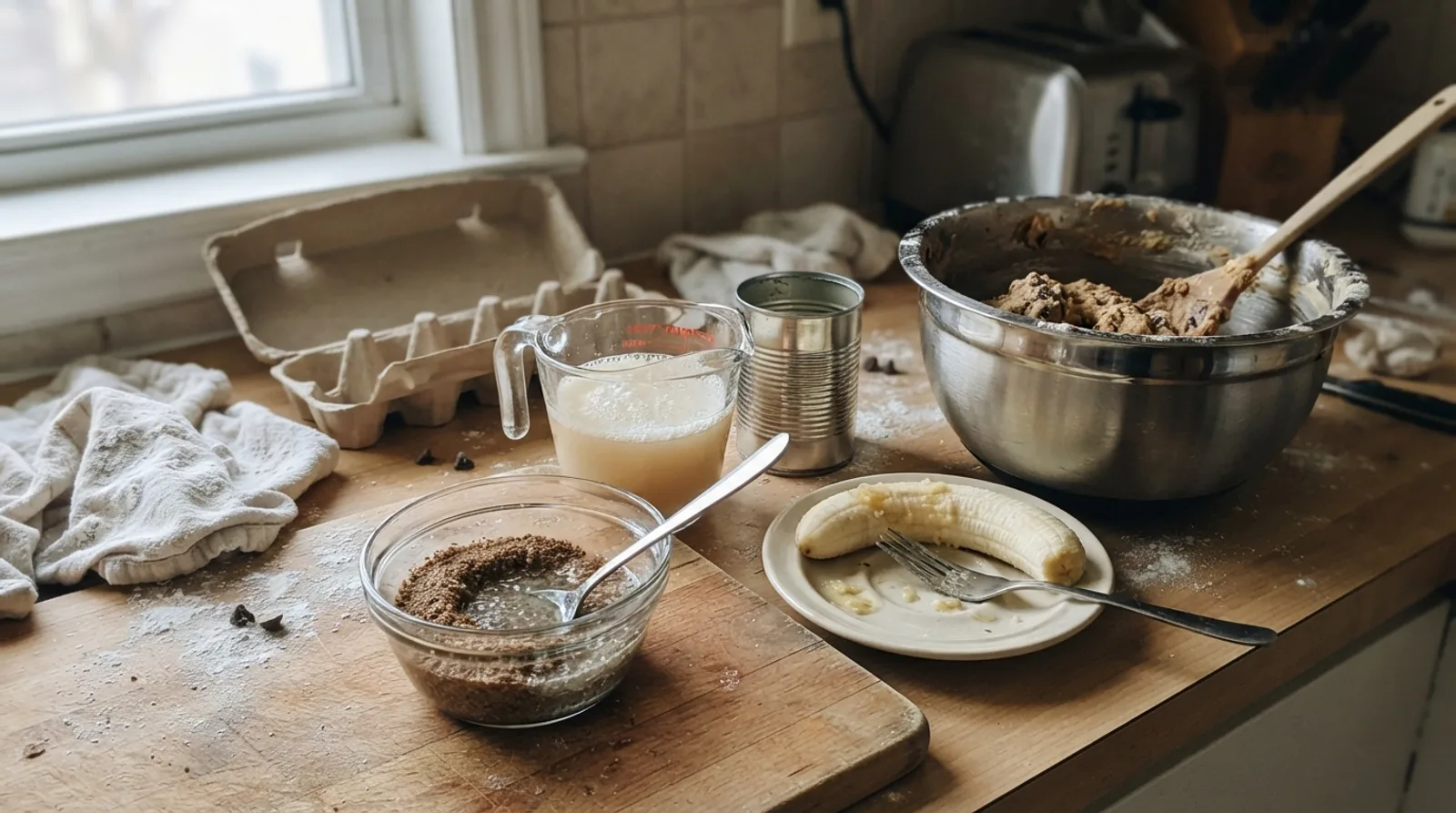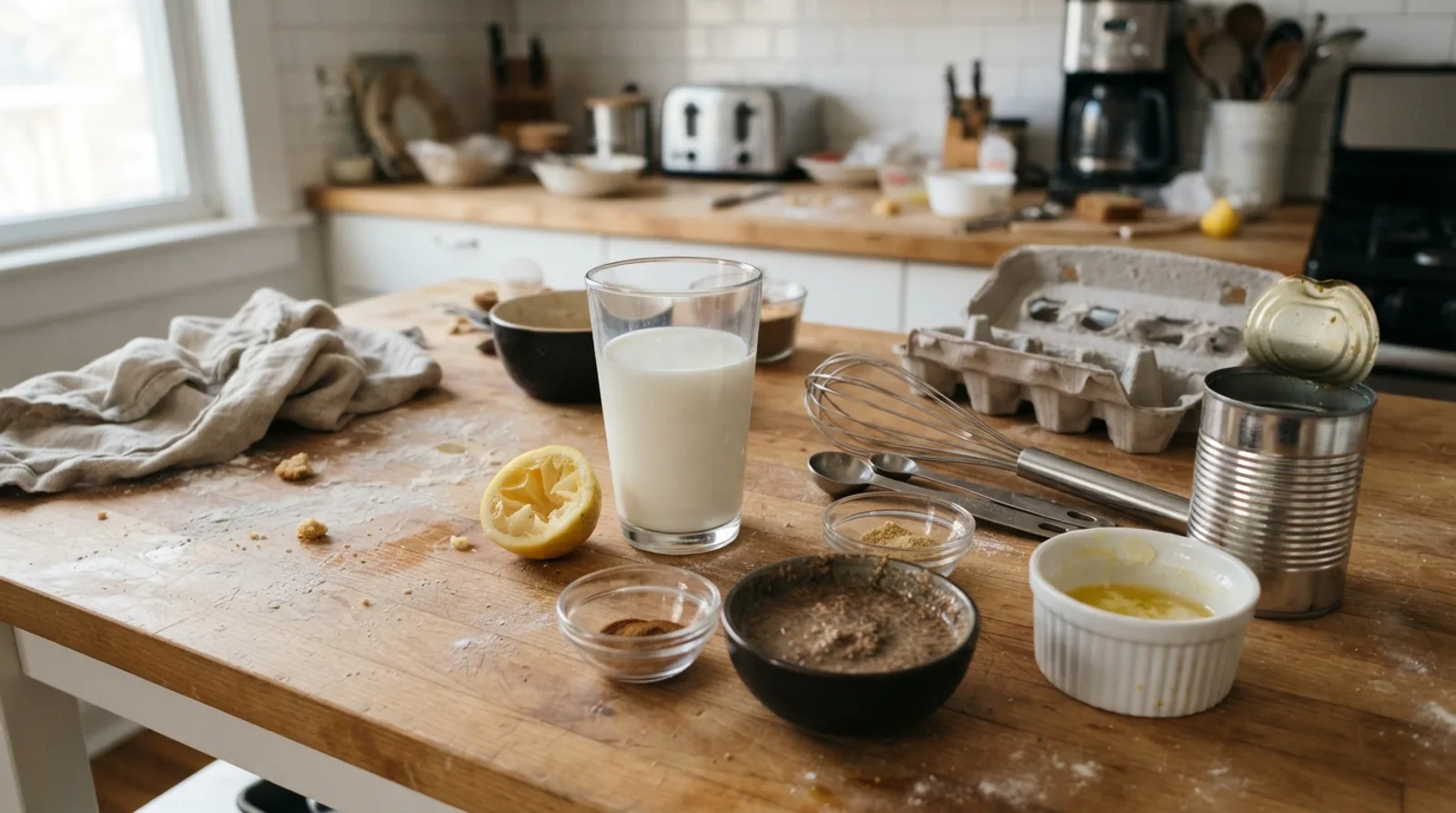
Quick answer: For 1 cup of buttermilk, put 1 tablespoon of lemon juice or white vinegar in a measuring cup, add milk to the 1-cup line and wait 5 to 10 minutes.
Pick what you are making below: for biscuits, Greek yogurt with milk comes closer.
Find the right buttermilk substitute
In most recipes the buttermilk's acid reacts with the baking soda for lift and keeps the crumb tender. Milk soured with lemon juice or vinegar brings that acid, and it is already in your fridge.

Milk and lemon juice
Best pick1 tbsp lemon juice and enough milk to make 1 cup
By weight: 15 g lemon juice and 230 g milk
Pour the lemon juice into a measuring cup, add milk up to the line, stir once and leave it 5 to 10 minutes, until it thickens slightly and shows small curds.
The classic swap, and the one university cooking guides give. Thinner and milder than real buttermilk, with the same lift.

Milk and white vinegar
1 tbsp white vinegar and enough milk to make 1 cup
By weight: 15 g white vinegar and 230 g milk
Same as lemon juice: vinegar in the cup first, milk to the line, then 5 to 10 minutes on the counter.
Works exactly like lemon juice. In a bake you will not taste the vinegar.

Greek yogurt and milk
⅓ cup plain Greek yogurt and ⅔ cup milk
By weight: 83 g plain Greek yogurt and 165 g milk
Whisk the yogurt and milk together until smooth, then use it right away, cold, where the recipe adds the buttermilk.
The closest match in thickness and tang: King Arthur Baking ranked it right behind real buttermilk in biscuits and tied with it in pancakes.

Plain kefir
1 cup plain unsweetened kefir
By weight: 245 g kefir
Shake the bottle and pour it in where the buttermilk goes.
Kefir is a cultured milk too, so it is close in tang and thickness. Use plain and unsweetened.
Plain yogurt
1 cup plain yogurt
By weight: 245 g plain yogurt
Stir it smooth. If it is thick, thin it with a spoonful or two of water or milk until it pours like heavy cream.
Tangy and thick, so it suits biscuits, cornbread and marinades. Use plain, not vanilla or sweetened.

Dried buttermilk
¼ cup dried buttermilk powder and 1 cup water
Whisk the powder into the flour and other dry ingredients, then add the water when the recipe says to add the buttermilk.
It is real buttermilk with the water taken out, so the flavor is right, and a tub keeps a long time.

Sour cream thinned with water
1 cup sour cream thinned with water until it pours like heavy cream
By weight: 230 g sour cream
Whisk a little water (or milk) into the sour cream until it pours like heavy cream, then measure what the recipe needs.
Rich and tangy; good in biscuits, dressings and cake. Light sour cream works too.

Milk and cream of tartar
1¾ tsp cream of tartar and 1 cup milk
Whisk the cream of tartar into the dry ingredients, then use the milk where the buttermilk goes.
Gives the acid for lift but no tang or thickness. King Arthur Baking found its biscuits lacked flavor.
Skip: Plain milk on its own. Without the acid, the baking soda has nothing to react with, so bakes come out flatter and darker.
The short answer
- To make 1 cup of buttermilk, put 1 tablespoon of lemon juice or white vinegar in a measuring cup, add milk up to the 1-cup line, stir, and let it stand 5 to 10 minutes until it thickens slightly and curdles.
- For biscuits, where you taste the buttermilk, the closest match is plain Greek yogurt whisked with milk, about ⅓ cup yogurt and ⅔ cup milk per cup: in King Arthur Baking's test it came second only to real buttermilk in biscuits and tied with it in pancakes.
- Plain yogurt, sour cream thinned with water, plain kefir, dried buttermilk powder, and 1¾ teaspoons of cream of tartar in 1 cup of milk all work too. Plain milk alone does not: it makes flat-tasting biscuits and denser, darker cakes.
- For dairy-free buttermilk, stir 1 tablespoon of lemon juice or vinegar into 1 cup of unsweetened plant milk. It thickens less than dairy milk but bakes the same.
Swap it in a whole recipe
Swap the buttermilk in your recipe
Ranked for most recipes. Pick something else above to change the list.
Buttermilk biscuits, without buttermilk
- 2 cups all-purpose flour
- 1 tbsp baking powder
- 1/2 tsp baking soda
- 1 tsp salt
- 6 tbsp cold butter
- 2¼ tsp lemon juice and enough milk to make ¾ cup (instead of ¾ cup buttermilk)
- Pour the lemon juice into a measuring cup, add milk up to the line, stir once and leave it 5 to 10 minutes, until it thickens slightly and shows small curds.
Out of something else? See every ingredient substitute
How to make buttermilk with milk and lemon juice or vinegar
Homemade buttermilk is milk with a little acid stirred in. Use 1 tablespoon of lemon juice or white vinegar for each cup, which is the amount every university cooking guide we checked gives, from Kansas State to Utah State, and the one King Arthur Baking uses. Put the acid in the cup first and fill with milk to the line, so the total is 1 cup, not 1 cup plus a tablespoon.
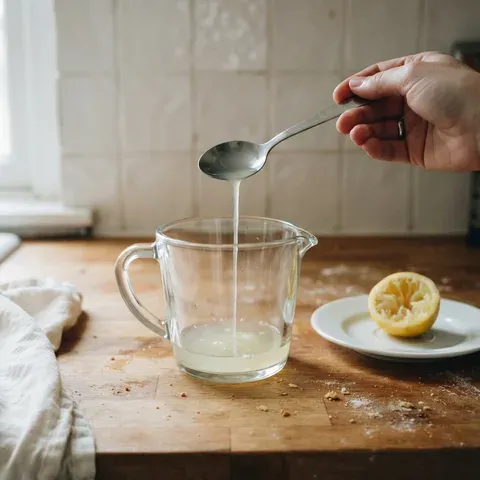
1. Lemon juice into a cup 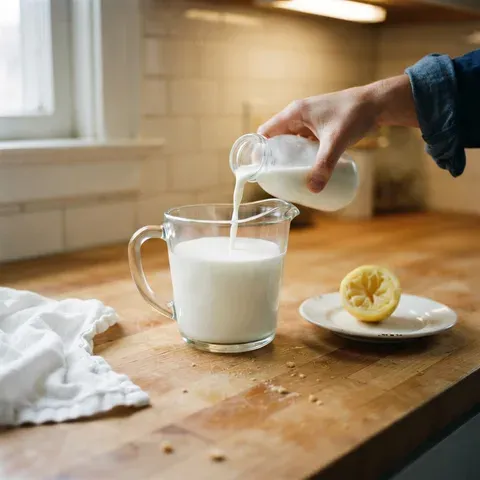
2. Milk to the 1-cup line 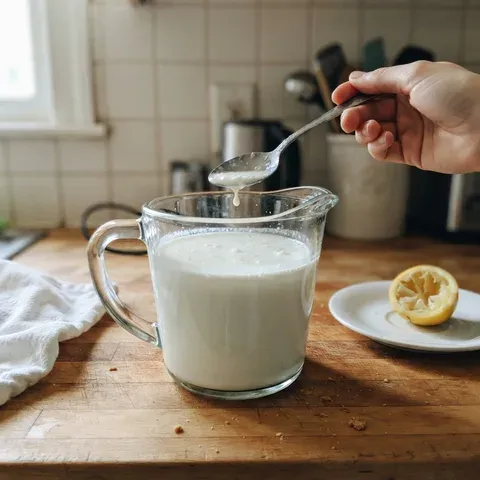
3. Wait 5 to 10 minutes
Recipe
Homemade buttermilk with lemon juice or vinegar
Milk soured with a little acid, the standard buttermilk substitute in university cooking guides. It gives a batter the same lift with baking soda; it is thinner and milder than store-bought buttermilk.
- Total time
- 10 min
- Makes
- Makes 1 cup
Ingredients
- 1 tbsp lemon juice or white vinegar
- Milk to make 1 cup (just under 1 cup)
Steps
- Pour the lemon juice or vinegar into a liquid measuring cup.
- Add milk up to the 1-cup line, so the total is 1 cup, and stir once.
- Leave it on the counter for 5 to 10 minutes, until it thickens very slightly and shows small curds.
- Stir it and use it in the same amount as the buttermilk in your recipe.
For other amounts, use 1 tablespoon of acid per cup: ¾ teaspoon for ¼ cup, 1½ teaspoons for ½ cup. With unsweetened plant milk, give it about 15 minutes; it thickens less but bakes the same.
Per serving (1 cup, made with whole milk): about 143 calories, 7 g protein, 12 g carbs, 7 g fat.
It will not get as thick as store-bought buttermilk, and that is fine: what a batter needs from it is the acid, which reacts with the baking soda. The chart below scales the acid for any amount the recipe asks for.
Buttermilk substitutes, and how much to use
Soured milk is the quickest, but it is not the only swap, and for some recipes not the best. Anything with the same tang and some of the same thickness will do the job.
| Substitute | For 1 cup |
|---|---|
| Milk and lemon juice | 1 tbsp lemon juice and enough milk to make 1 cup15 g lemon juice and 230 g milkBest in: pancakes or waffles, cake or cupcakes, muffins or quick bread |
| Milk and white vinegar | 1 tbsp white vinegar and enough milk to make 1 cup15 g white vinegar and 230 g milkBest in: pancakes or waffles, cake or cupcakes, muffins or quick bread |
| Greek yogurt and milk | ⅓ cup plain Greek yogurt and ⅔ cup milk83 g plain Greek yogurt and 165 g milkBest in: biscuits or scones, pancakes or waffles, cake or cupcakes |
| Plain yogurt | 1 cup plain yogurt245 g plain yogurtBest in: fried chicken marinade |
| Sour cream thinned with water | 1 cup sour cream thinned with water until it pours like heavy cream230 g sour creamBest in: ranch or dressing |
| Plain kefir | 1 cup plain unsweetened kefir245 g kefirBest in: biscuits or scones, fried chicken marinade, ranch or dressing |
| Dried buttermilk | ¼ cup dried buttermilk powder and 1 cup waterBest in: biscuits or scones |
| Milk and cream of tartar | 1¾ tsp cream of tartar and 1 cup milkBest in: biscuits or scones, pancakes or waffles, cake or cupcakes |
Greek yogurt and milk is King Arthur Baking's blend, scaled down: one 5.3-ounce container of Greek yogurt with 1⅓ cups of milk makes 2 cups. Plain yogurt goes in cup for cup, as the Kansas State guide gives it; thin very thick yogurt, or sour cream, with a little water until it pours like heavy cream. Dried buttermilk is whisked into the dry ingredients, with the water added where the buttermilk would go. Cream of tartar gives the acid but none of the tang.
| Buttermilk | Lemon juice or vinegar, then milk to the line | Greek yogurt and milk | Dried buttermilk, plus the same water |
|---|---|---|---|
| ¼ cup | ¾ tsp | 4 tsp plain Greek yogurt and 8 tsp milk | 1 tbsp |
| ½ cup | 1½ tsp | 8 tsp plain Greek yogurt and ⅓ cup milk | 2 tbsp |
| ⅔ cup | 2 tsp | 3½ tbsp plain Greek yogurt and 7 tbsp milk | 8 tsp |
| ¾ cup | 2¼ tsp | ¼ cup plain Greek yogurt and ½ cup milk | 3 tbsp |
| 1 cup | 1 tbsp | ⅓ cup plain Greek yogurt and ⅔ cup milk | ¼ cup |
| 1½ cups | 1½ tbsp | ½ cup plain Greek yogurt and 1 cup milk | 6 tbsp |
| 2 cups | 2 tbsp | ⅔ cup plain Greek yogurt and 1⅓ cups milk | ½ cup |
Which buttermilk substitute works best? What the tests found
King Arthur Baking baked the same biscuits, pancakes and cake with real buttermilk and with each common swap, and the results line up with what the buttermilk does in each one.
Real buttermilk
- Biscuits
- Best
- Pancakes
- Best
- Cake
Greek yogurt and milk
- Biscuits
- Second
- Pancakes
- Tied best
- Cake
Milk with vinegar or cream of tartar
- Biscuits
- Lacked flavor
- Pancakes
- Cake
Plain milk
- Biscuits
- Flat taste
- Pancakes
- Rose less
- Cake
- Darker, denser
| Biscuits | Pancakes | Cake | |
|---|---|---|---|
| Real buttermilk | Best | Best | |
| Greek yogurt and milk | Second | Tied best | |
| Milk with vinegar or cream of tartar | Lacked flavor | ||
| Plain milk | Flat taste | Rose less | Darker, denser |
| Making | Best swap | Next best |
|---|---|---|
| Biscuits or scones | Greek yogurt and milk | Dried buttermilk |
| Pancakes or waffles | Greek yogurt and milk | Milk and lemon juice |
| Cake or cupcakes | Milk and lemon juice | Milk and white vinegar |
| Muffins or quick bread | Milk and lemon juice | Greek yogurt and milk |
| Cornbread | Milk and lemon juice | Greek yogurt and milk |
| Fried chicken marinade | Plain yogurt | Plain kefir |
| Ranch or dressing | Plain kefir | Greek yogurt and milk |
Biscuits and scones
In biscuits you can taste the buttermilk, so thickness and tang matter. Greek yogurt and milk came closest in the test; dried buttermilk, kefir and plain yogurt are next. Soured milk still rises well, but the biscuits taste plainer.
Pancakes, waffles, muffins and cornbread
These mostly need the acid for lift, so milk with lemon juice or vinegar works well. Greek yogurt and milk tied with real buttermilk in pancakes.
Cakes, including red velvet
Every swap worked in King Arthur Baking's cake except plain milk, which made it darker and denser. Soured milk is the easy choice.
Fried chicken, ranch and dressings
Nothing is baked here, so the buttermilk's own tang and body carry the dish. Use kefir, plain yogurt or Greek yogurt with milk; soured milk is thin enough that a dressing turns runny and less coating clings to the chicken. Bon Appétit's editors go further and skip soured milk altogether, reaching for kefir or thinned yogurt whenever the buttermilk's flavor matters.
Dairy-free and vegan buttermilk
Stir 1 tablespoon of lemon juice or white vinegar into 1 cup of unsweetened plant milk, such as soy, oat or almond, and let it rest about 15 minutes. King Arthur Baking notes that dairy-free soured milk does not thicken quite as much, but the result in your baking is the same. Pick Plant milk in the finder to see only the swaps that work with it.
Lemon juice or vinegar: which is better?
Neither. Both give the same acid in the same amount, and none of the guides we read prefers one. Use white vinegar when you have no lemons; use lemon juice when you will taste it, as in a dressing. Bottled lemon juice is fine.
Why recipes call for buttermilk
Buttermilk is acidic. In a batter with baking soda, that acid is what makes the bubbles, which is why King Arthur Baking calls it prized for its leavening ability when paired with baking soda. It also adds tang and makes cakes and biscuits tender. That is why plain milk falls short: without the acid, the baking soda has nothing to react with, and the bake comes out flatter and darker.
Keep the version that worked
Once a swap works, write it down. Save to CookEase on the recipe card, or under Swap it in a whole recipe, keeps it as a recipe in your cookbook, and you can edit any saved recipe to note the swap. Out of eggs as well? The egg substitute finder works the same way. There are finders for baking soda and baking powder too, and every ingredient substitute is on one page. To make half a batch of biscuits, the halving calculator does single amounts and the recipe converter resizes the whole recipe.
Keep every recipe the way you actually make it.
Save recipes from any link, video or photo, note your swaps, and cook from them step by step with the Cooking Assistant.