Quick answer: For 1 tablespoon of cornstarch, use 2 tablespoons of all-purpose flour.
Need it gluten-free or clear? Use the same amount of arrowroot or potato starch. Pick what you are thickening below for the best swap and the amount.
Find the right cornstarch substitute
In gravy and pan sauces cornstarch thickens the drippings and broth into a smooth sauce without much simmering.
All-purpose flour
Best pick2 tbsp all-purpose flour
By weight: 16 g all-purpose flour
Whisk the flour into a little cold water or broth until smooth, stir it in, and simmer a few minutes more until the sauce thickens and no longer tastes floury.
Twice as much as cornstarch, and the sauce turns out opaque rather than clear. The everyday swap for gravy, soups and cream sauces.
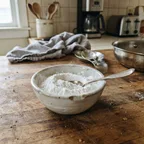
Arrowroot starch
1 tbsp arrowroot starch
Stir it into a little cold liquid first, add it near the end, and take the pan off the heat once it thickens: long, hard boiling makes it thin out again.
Gives a clear, glossy sauce and works well with acidic ingredients. Bob's Red Mill notes it can curdle milk-based cream sauces.
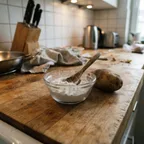
Potato starch
1 tbsp potato starch
Mix it with a little cold liquid, stir it in near the end and bring it just to a simmer. Add a little more if needed: it breaks down if it boils for long.
Kansas State's chart puts it level with cornstarch; Bob's Red Mill suggests up to 1¾ times as much, so keep a little extra ready.
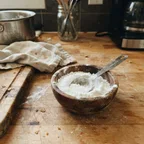
Tapioca starch
1 tbsp + 1 tsp tapioca starch
Whisk it into a little cold liquid, then stir it in. It thickens quickly at a gentle simmer.
A third more than cornstarch, with a glossy finish. Bob's Red Mill gives 4 tablespoons of tapioca starch for 3 of cornstarch.
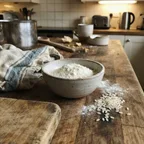
Sweet rice flour
2 tbsp sweet (glutinous) rice flour
Whisk it into a little cold liquid until smooth, then stir it in and simmer until thick.
Twice as much as cornstarch, and gluten-free despite the name. Bob's Red Mill notes it holds up well to high heat.
The short answer
- Use 2 tablespoons of all-purpose flour for every tablespoon of cornstarch. The sauce comes out opaque rather than clear, and needs a few minutes of simmering.
- Arrowroot and potato starch go 1 for 1 with cornstarch, tapioca starch takes a third more, and quick-cooking tapioca or sweet rice flour twice as much. All of them are gluten-free.
- Arrowroot can curdle milk-based sauces and thins out with long boiling, so use it in stir-fry sauces and glazes. For fruit pies, quick-cooking tapioca is the classic.
Swap it in a whole recipe
Swap the cornstarch in your recipe
Ranked for gravy and pan sauces. Pick something else above to change the list.
Beef stir-fry sauce, without cornstarch
- 1/2 cup beef broth
- 3 tbsp soy sauce
- 1 tbsp brown sugar
- 2 tbsp all-purpose flour (instead of 1 tbsp cornstarch)
- 2 cloves garlic, minced
- 1 tsp grated ginger
- Whisk the flour into a little cold water or broth until smooth, stir it in, and simmer a few minutes more until the sauce thickens and no longer tastes floury.
Out of something else? See every ingredient substitute
What can I use instead of cornstarch?
Cornstarch is pure starch, and starch is what thickens: its grains swell and soak up liquid as they heat. So any other starch can take its place, and flour can too, because it is mostly starch with some protein. The difference between them is how strong they are, how clear the sauce turns out, and how they handle heat, dairy and acid. The amounts below come from Kansas State Research and Extension's substitution chart, a university cooking guide, and from Bob's Red Mill, which sells most of these starches.
| Thickener | For 1 tbsp cornstarch |
|---|---|
| All-purpose flour | 2 tbsp all-purpose flourFor ¼ cup: ½ cup all-purpose flour |
| Arrowroot starchGluten-free | 1 tbsp arrowroot starchFor ¼ cup: ¼ cup arrowroot starch |
| Potato starchGluten-free | 1 tbsp potato starchFor ¼ cup: ¼ cup potato starch |
| Tapioca starchGluten-free | 4 tsp tapioca starchFor ¼ cup: ⅓ cup tapioca starch |
 Quick-cooking tapiocaGluten-free | 2 tbsp quick-cooking tapiocaFor ¼ cup: ½ cup quick-cooking tapioca |
| Sweet rice flourGluten-free | 2 tbsp sweet (glutinous) rice flourFor ¼ cup: ½ cup sweet (glutinous) rice flour |
Flour is the swap almost every kitchen has, at twice the amount. Arrowroot and potato starch are the closest match, spoon for spoon. Tapioca starch is a little weaker, so it takes a third more. Quick-cooking tapioca and sweet rice flour each take twice as much. Every swap except flour is gluten-free.
How to use flour instead of cornstarch
Use 2 tablespoons of all-purpose flour for each tablespoon of cornstarch. Flour has gluten and other proteins along with its starch, so it takes more of it to thicken the same amount, and the sauce turns out cloudy rather than clear. That is no problem in gravy, chowder or a creamy pan sauce, where nobody expects to see through it.
- Make a slurry: whisk the flour into a few spoonfuls of cold water, broth or milk until smooth. Flour stirred straight into hot liquid turns to lumps.
- Simmer it: stir the slurry in and let the sauce simmer a few minutes, stirring, until it thickens and no longer tastes of raw flour.
- Or start with a roux: for gravy, cook the flour in the fat from the pan for a minute before whisking in the liquid. It is how many cooks make turkey gravy anyway.
Arrowroot, potato starch and tapioca
Arrowroot
Arrowroot thickens like cornstarch, 1 for 1, and makes a glossy, clear sauce that works well with acidic ingredients such as citrus and tomatoes. Bob's Red Mill warns it can curdle milk-based cream sauces, and that it breaks down in long, high-heat cooking. Stir it in near the end, and take the pan off the heat once it has thickened. That makes it a fine match for stir-fry sauces and fruit glazes.
Potato starch
Kansas State lists potato starch level with cornstarch, while Bob's Red Mill suggests up to 1¾ tablespoons for each tablespoon of cornstarch, so start with the same amount and keep a little more ready. It thickens quickly but will thin out if it boils for long, so add it near the end, like arrowroot.
Tapioca starch and quick-cooking tapioca
Tapioca starch, sometimes sold as tapioca flour, is a little weaker than cornstarch: Bob's Red Mill gives 4 tablespoons of it for 3 of cornstarch. Quick-cooking tapioca is the same starch in small granules, the kind on the box next to the pudding mix, and Kansas State gives 2 tablespoons for each tablespoon of cornstarch. Its home is fruit pie: toss it with the fruit and sugar, let it stand a few minutes, and it bakes into a clear, glossy filling.
Sweet rice flour
Sweet rice flour, also called glutinous rice flour, is ground from sticky rice and has no gluten at all. Kansas State's chart puts it level with all-purpose flour as a thickener, so it is twice the cornstarch, and Bob's Red Mill notes it holds up well to high heat, which makes it a good gluten-free pick for soups and stews that simmer a long time.
Which swap for gravy, pie, stir-fry and pudding
- Gravy and pan sauces: flour, as a slurry or a roux. For gluten-free gravy, arrowroot or potato starch added at the end.
- Cream sauces, pudding and custard: flour or sweet rice flour. Skip arrowroot, which can curdle milk.
- Fruit pie: quick-cooking tapioca, then tapioca starch. Flour works but makes a cloudier filling.
- Stir-fry sauce and glazes: arrowroot or tapioca starch for the same glossy finish as cornstarch.
- Soups and stews: flour or sweet rice flour, which stand up to long simmering.
Swaps that do not work
Avoid
Do
Kansas State's chart makes the point that a substitute may change the flavor, color or texture and still give a good result. A flour-thickened sauce is a little less glossy than one made with cornstarch, and for gravy most people will never notice.
Keep the version that worked
Save the recipe with the swap already in it: the Save to CookEase button under Swap it in a whole recipe puts it in your cookbook, and you can edit any saved recipe to note what you used. Making gravy for a holiday dinner? Our Thanksgiving dinner planner times the whole meal. Out of something else? See the heavy cream and baking powder substitutes, or every ingredient substitute.
Keep every recipe the way you actually make it.
Save recipes from any link, video or photo, note your swaps, and cook from them step by step with the Cooking Assistant.