The short answer
- Dry brine: 1 tsp Diamond Crystal or ½ tsp Morton kosher salt per pound, 24 to 48 hours in the fridge. A 16 lb turkey takes 5 tbsp + 1 tsp Diamond Crystal or 2 tbsp + 2 tsp Morton.
- Wet brine: ½ cup table salt per gallon of cold water, which is 2¼ cups of Diamond Crystal or 1 cup + 2 tablespoons of Morton for 2 gallons, for 6 to 12 hours.
- Keep it at 40°F or below, and never brine a kosher, self-basting or "enhanced" turkey: it is already salted.
Turkey brine calculator
Brine
Your salt
Dry brine for a 16 lb turkey
5 tbsp + 1 tsp Diamond Crystal kosher salt
That is 1 tsp a pound, 43 g in all. Rub it all over, inside the cavity and under the skin of the breast and legs. In Morton kosher salt: 2 tbsp + 2 tsp or table salt: 2 tbsp + 1 tsp.
When to brine for dinner on Thu, Nov 26 at 4:00 pm
Frozen? Move it to the fridge by Saturday, Nov 21
4 days to thaw, so it is thawed when the brine starts. A fresh turkey can skip this.
Salt it by Wed, Nov 25, 10:30 am
Or as early as Tue, Nov 24, 10:30 am: 24 to 48 hours, uncovered on a rack or wrapped, in the fridge at 40°F or below.
Ready to roast at Thu, Nov 26, 10:30 am
Pat the skin dry with paper towels. Do not rinse it, and add no more salt.
In the oven at 11:00 am
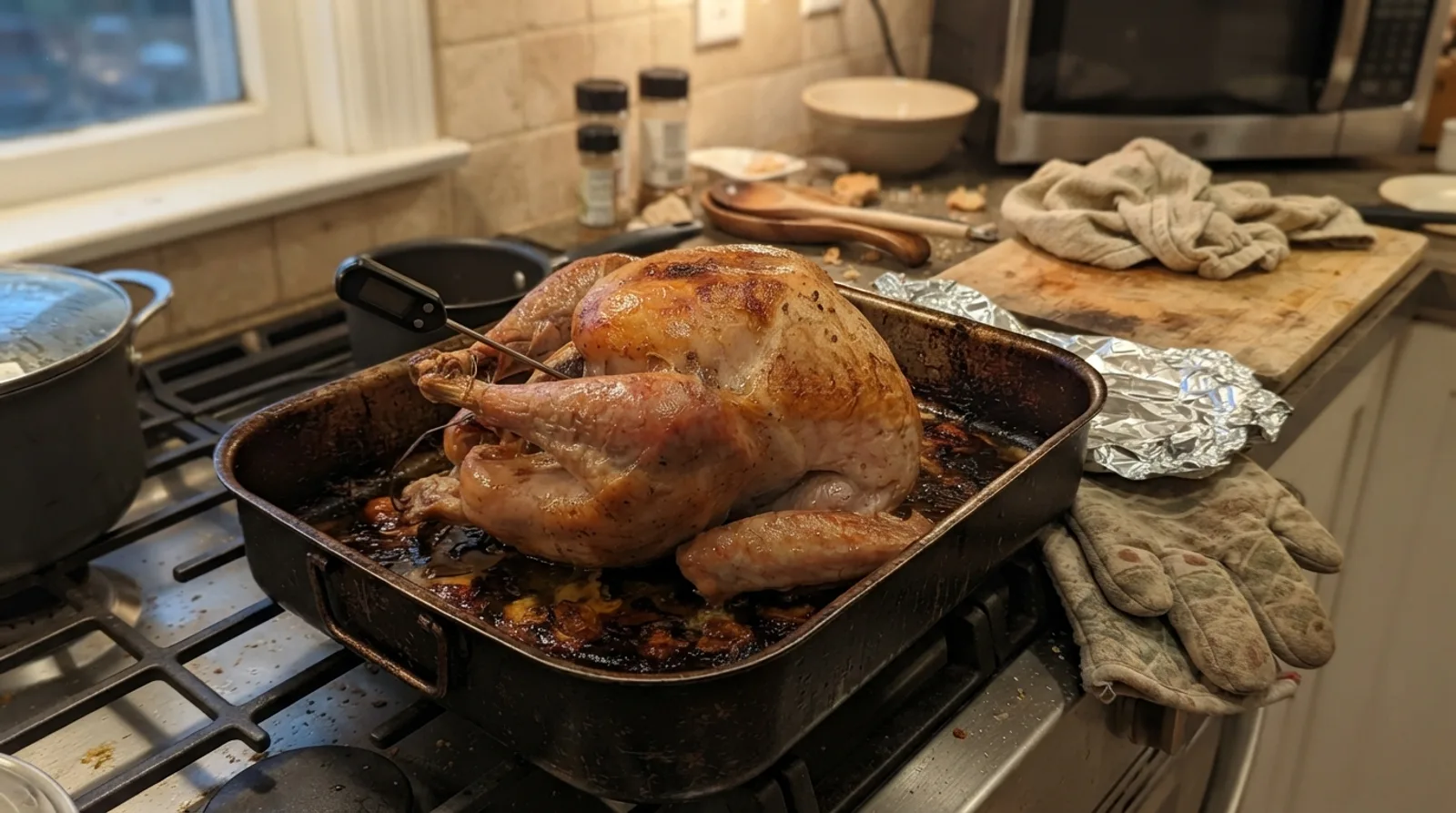
325°F for 3¾ to 4¼ hours, done at 165°F in the breast and the innermost thigh and wing.
Salt is measured by weight: a tablespoon of Diamond Crystal weighs 8 g, Morton kosher 16 g and table salt 18 g.
Pick a dry or wet brine, put in your turkey's weight and choose the salt you actually have, and the box measures it out: the salt for a dry brine, or the salt and water for a wet one. Then it works back from your dinner time to when the brine starts, when the turkey is ready to roast, and the last day to move a frozen turkey to the fridge so it is thawed in time. Print my brining plan puts it on the fridge door, and Full cooking schedule opens our turkey cooking time calculator for the roasting side of the day.
Why the brand of salt matters
Brine recipes are written in cups and spoons, but salt works by weight, and the three salts in American kitchens weigh very different amounts per spoon. By King Arthur Baking's weight chart, a tablespoon of Diamond Crystal kosher salt weighs 8 g, a tablespoon of Morton kosher salt 16 g and a tablespoon of table salt 18 g.
So a recipe that says "1 cup of kosher salt" is twice as salty made with Morton as with Diamond Crystal, and that is the most common reason a brined turkey comes out too salty. The calculator measures every amount by weight first and then gives it in your salt. If a recipe does not name its brand, check where it came from: America's Test Kitchen, for one, measures its kosher salt in Diamond Crystal.
How to dry brine a turkey
A dry brine is just salt rubbed on the turkey a day or two before it roasts. America's Test Kitchen uses 1 teaspoon of kosher salt per pound, measured in Diamond Crystal, and leaves it in the fridge for 24 to 48 hours. In Morton kosher salt that is ½ teaspoon a pound, and in table salt a little under ½ teaspoon.
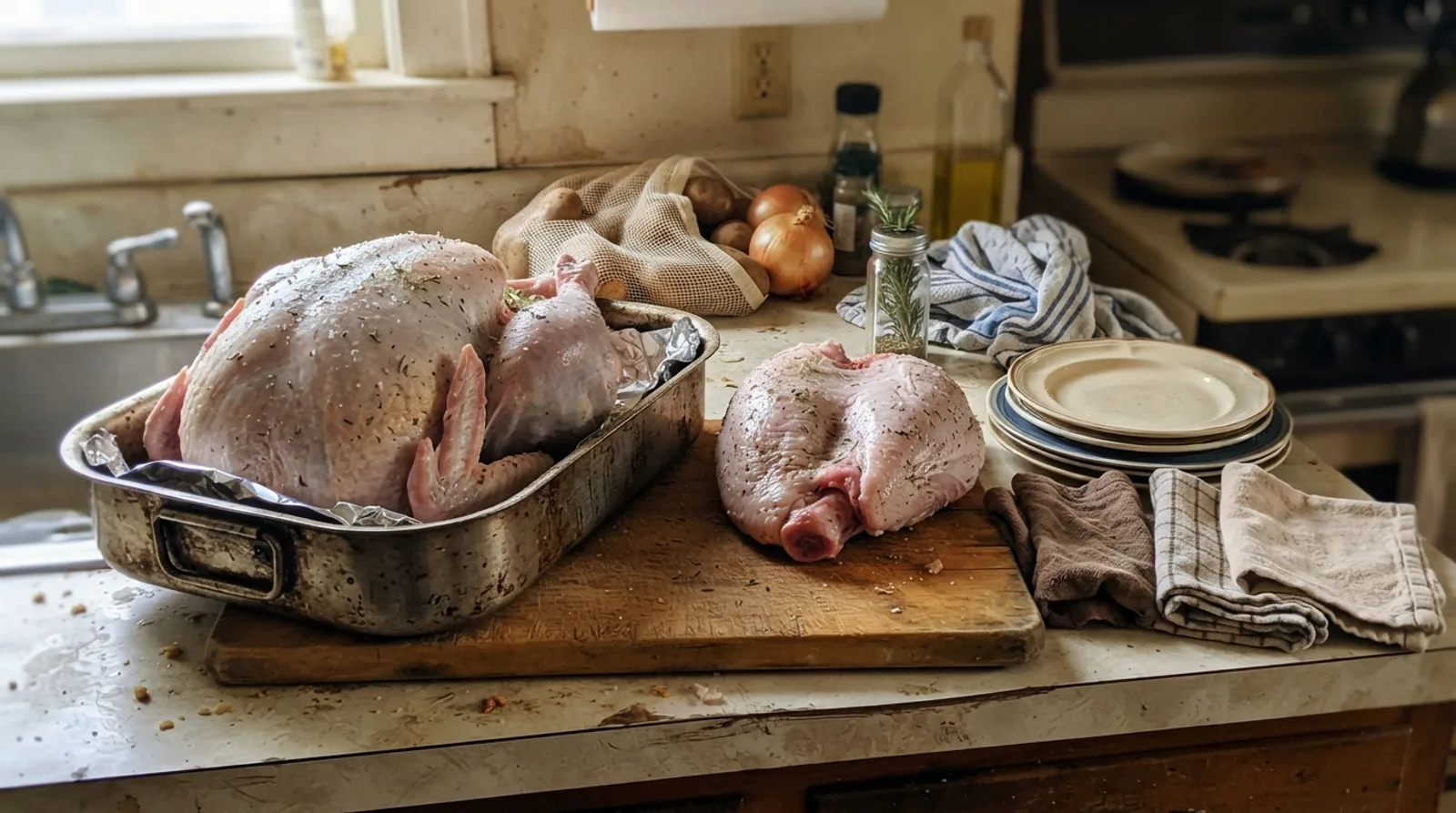
- Start with a thawed turkey. Take out the neck and giblets and pat it dry with paper towels.
- Measure the salt from the calculator or the table below, into a small bowl.
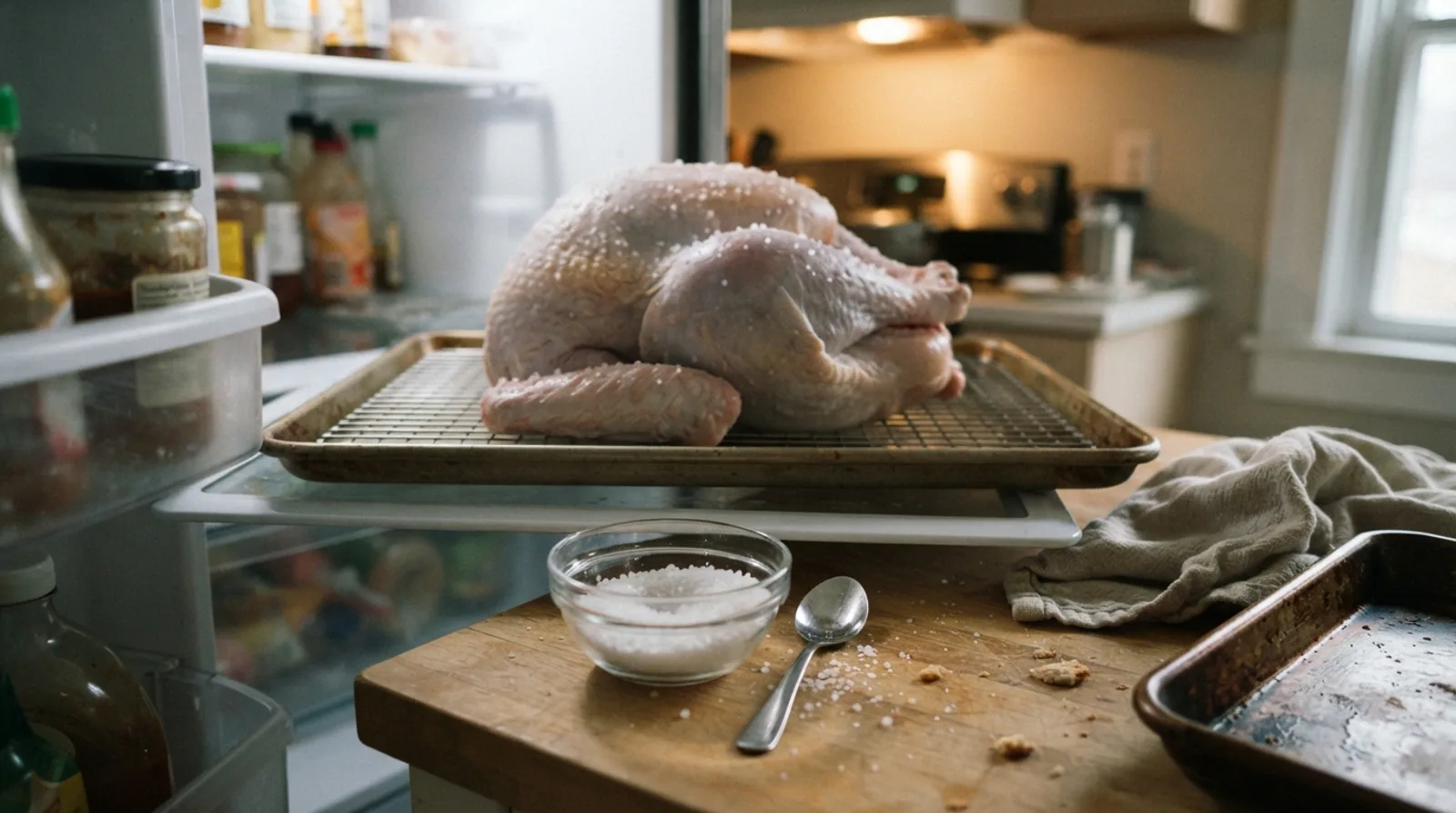
- Rub it on evenly: inside the cavity, and under the skin of the breast and legs, where it reaches the meat. Loosen the skin with your fingers first.
- Refrigerate it for 24 to 48 hours, wrapped tightly, or uncovered on a rack in a pan if you want the skin to dry out for crisper roasting.
- Pat it dry and roast it. Do not rinse it, and add no more salt to the outside.
| Turkey | Diamond Crystal | Morton kosher | Table salt |
|---|---|---|---|
| 8 lb | 2 tbsp + 2 tsp | 1 tbsp + 1 tsp | 1 tbsp + ½ tsp |
| 10 lb | 3 tbsp + 1 tsp | 1 tbsp + 2 tsp | 1 tbsp + 1½ tsp |
| 12 lb | 4 tbsp | 2 tbsp | 1 tbsp + 2¼ tsp |
| 14 lb | 4 tbsp + 2 tsp | 2 tbsp + 1 tsp | 2 tbsp + ¼ tsp |
| 16 lb | 5 tbsp + 1 tsp | 2 tbsp + 2 tsp | 2 tbsp + 1 tsp |
| 18 lb | 6 tbsp | 3 tbsp | 2 tbsp + 2 tsp |
| 20 lb | 6 tbsp + 2 tsp | 3 tbsp + 1 tsp | 3 tbsp |
| 22 lb | 7 tbsp + 1 tsp | 3 tbsp + 2 tsp | 3 tbsp + ¾ tsp |
| 24 lb | ½ cup | 4 tbsp | 3 tbsp + 1¾ tsp |
A simple wet turkey brine recipe
A wet brine soaks the turkey in salted water. America's Test Kitchen's brine is ½ cup of table salt per gallon of cold water: 2 gallons and 1 cup of table salt for a 12 to 17 lb turkey, 3 gallons and 1½ cups for 18 to 24 lb, for 6 to 12 hours. Morton's own overnight brine lands in the same place, a little milder: ½ cup of its kosher salt per gallon for up to 14 hours.
| Turkey and water | Diamond Crystal | Morton kosher | Table salt |
|---|---|---|---|
| 12 to 17 lb, 2 gallons | 2¼ cups | 1 cup + 2 tbsp | 1 cup |
| 18 to 24 lb, 3 gallons | 3¼ cups + 2 tbsp | 1½ cups + 3 tbsp | 1½ cups |
Recipe
Simple wet-brined roast turkey
The plain salt-and-water brine, measured for a 12 to 14 lb turkey in whichever salt you have, then roasted by the USDA timetable.
- Total time
- 10 hr 25 min
- Makes
- Makes 12 to 14 servings
Ingredients
- 1 whole turkey, 12 to 14 lb, fresh or fully thawed (not kosher, self-basting or enhanced)
- 2 gallons cold water
- 1 cup table salt, or 1 cup + 2 tablespoons Morton kosher salt, or 2¼ cups Diamond Crystal kosher salt
Steps
- Stir the salt into the cold water in a food-grade container or brining bag big enough for the turkey, until it dissolves.
- Take out the neck and giblets. Lower the turkey into the brine breast down; if it is not covered, mix more water and salt at the same ratio. Cover and refrigerate at 40°F or below for 6 to 12 hours.
- Lift the turkey out, let it drain and pat it dry with paper towels, inside and out. Throw the brine away.
- Roast it breast side up on a rack in a shallow pan, uncovered, at 325°F: 2¾ to 3 hours for 12 lb, 3 to 3¾ hours for 13 to 14 lb, until a thermometer reads 165°F in the thickest part of the breast and the innermost thigh and wing.
- Let it stand 20 minutes, loosely covered with foil, then carve.
Skip any extra salt in the rub and use unsalted butter or broth for the gravy: the drippings of a brined turkey are already salty. Nutrition is for the roast turkey, meat and skin (USDA); the brine adds sodium, not calories.
Per serving (4 oz roast turkey, meat and skin): about 214 calories, 32 g protein, 0 g carbs, 8 g fat.
Sugar, herbs, citrus peel and peppercorns are all common additions and change the flavor, not the salt. If you add them, keep the salt the same, and if a recipe heats the brine to dissolve the sugar, let it cool completely before the turkey goes in.
Brining safely: keep it cold
The USDA's brining guidance comes down to temperature and time:
- Keep the turkey and brine in the fridge at 40°F or below, the whole time. Never leave a brining turkey out on the counter.
- Never brine longer than 2 days.
- Use a food-grade container made of plastic, stainless steel or glass, or a brining bag, with a lid or cover, that fits in your fridge. Put the turkey in breast down and make sure the brine covers it.
- Do not wash the turkey before brining. Splashes from raw poultry spread bacteria around the sink.
- Throw the brine away afterward; it has had raw turkey in it.
Do not brine
- A kosher turkey: it is salted during processing.
- A self-basting, "enhanced" or pre-brined turkey: it has been injected with a salt solution.
- A turkey that is still frozen.
- With Morton in place of Diamond Crystal, cup for cup.
Do
- Read the label for "kosher", "self-basting", "enhanced", "basted" or a percent of solution.
- Buy a plain fresh turkey, or thaw a frozen one completely in the fridge first.
- Measure your salt by brand, or by weight on a kitchen scale.
- Keep it at 40°F or below, and brine no longer than 2 days.
The label matters more than it looks. The USDA's food data lists a roasted turkey "with added solution" at about 224 mg of sodium per 100 g, against 103 mg for a plain one, so an enhanced turkey arrives already more than twice as salty, and brining it on top makes it hard to eat.
Do you rinse a turkey after brining?
The USDA advises against washing raw poultry, because rinsing splashes bacteria onto the sink, the counter and anything nearby. After a wet brine, lift the turkey out, let it drain and pat it dry with paper towels, inside and out. Some recipes, including Butterball's and Morton's, do say to rinse it. If you follow one of those, clear dish racks and towels away from the sink first, run the water gently, and clean the sink and counter with hot soapy water afterward. A dry-brined turkey is never rinsed: the salt is meant to stay.
When to start brining for Thanksgiving
Work back from when the turkey goes in the oven. For Thanksgiving dinner at 4 pm on Thursday, November 26, 2026, a 16 lb turkey goes in at 11:00 am, so a dry brine goes on between Tuesday morning and Wednesday morning, and a wet brine starts on Wednesday night. A frozen turkey has to be thawed before either one, at 1 day in the fridge for every 4 pounds: for a 16 lb dry-brined turkey that means moving it to the fridge by Saturday, November 21. The calculator works all of this out for your turkey and your dinner time.
After brining: roast it, and plan the rest
A brined turkey roasts for the same time as any other: the turkey cooking time calculator gives the time for its weight and when it goes in for your dinner, and it is done at 165°F in the breast and the innermost thigh and wing. Its drippings are saltier than usual, so taste the gravy before you season it. Still choosing a size? The turkey per person calculator sizes it for your guests.
For the whole day, the Thanksgiving planner puts the brine, the oven and every side on one schedule, with a shopping list sorted by aisle. Saving the brine recipe to CookEase keeps it with the rest of your Thanksgiving recipes for next year.
Keep your Thanksgiving recipes together.
Save the brine, the turkey and every side from any site or video, scale them to your crowd, and shop from one list.