
The 3-Recipe Week: How to Plan Seven Days of Groceries Around Just Three Dinners
Meal planning fails because it asks for seven perfect decisions. Plan three anchor recipes instead, build one consolidated grocery list, and let overlap ingredients cover the rest of the week.
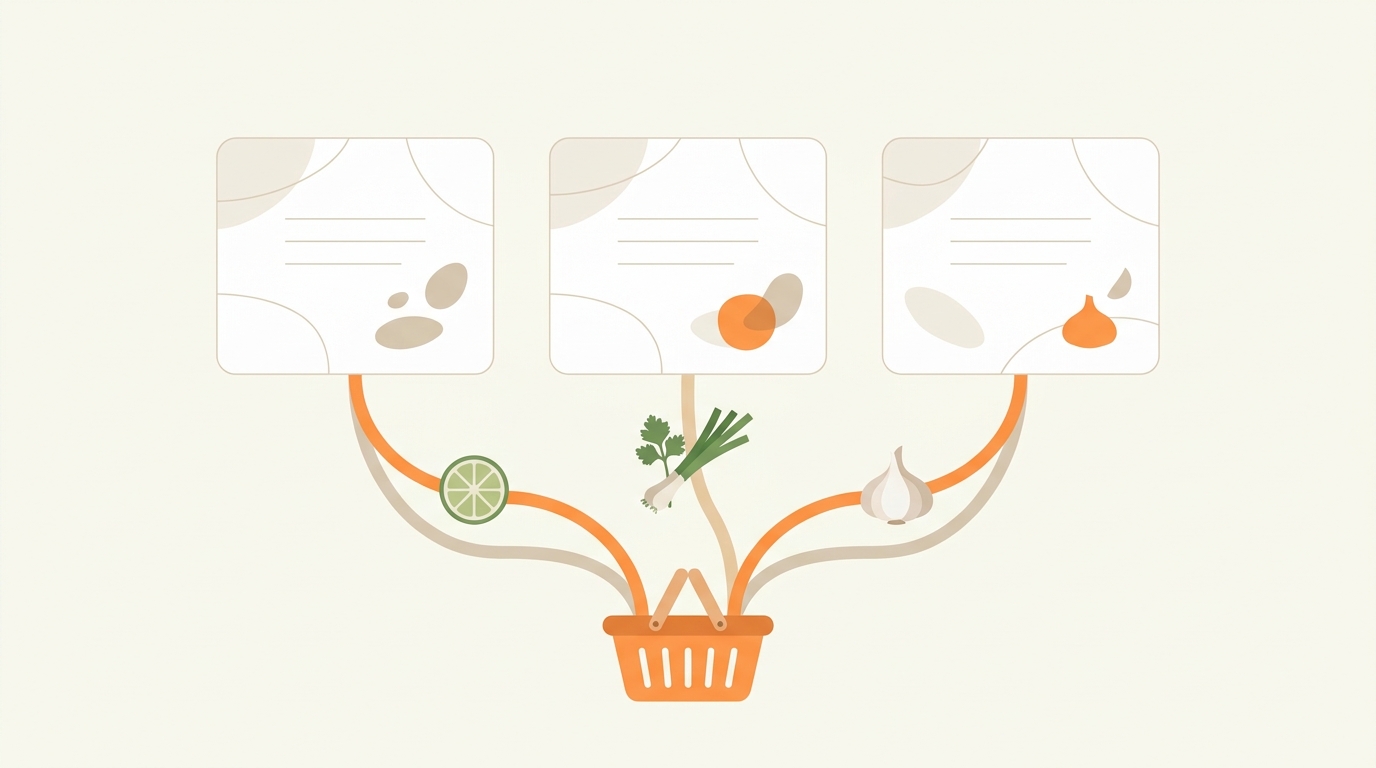
Traditional meal planning asks you to make seven perfect dinner decisions every Sunday, shop for all of them, and then execute the plan against the chaos of a real week. It fails for almost everyone, usually by Wednesday.
The 3-recipe week is the lazy, durable alternative: choose three real recipes as anchors, shop once for a list built around them, and let deliberate ingredient overlap plus leftovers cover the remaining nights. It cuts planning time to fifteen minutes, shrinks the grocery bill, and, counterintuitively, wastes far less food than the ambitious seven-dinner plan ever did.
Why Seven-Day Plans Collapse
A full week's plan carries two hidden fragilities. First, it assumes a predictable week: no late meeting, no kid's practice running long, no night when you simply cannot. One skipped dinner cascades, because Thursday's fresh fish doesn't wait for you. Second, seven distinct recipes means seven distinct ingredient lists, and the leftover half-bunches and quarter-jars from each become the compost of Sunday's good intentions. American households throw out roughly a third of the food they buy, and over-planning is a major driver.
Three anchors, by contrast, leave slack in the system. Life happens on Tuesday? The plan doesn't break; a night just shifts.
Choosing Three Recipes That Work Together
The skill of the 3-recipe week is picking anchors that quietly share a pantry. You're aiming for three properties:
- One shared fresh backbone. Pick recipes that overlap on the perishables, the things that actually go bad. If two of your three use cilantro, limes, or scallions, you buy them once and use them up. A sheet-pan chicken, a taco night, and a fried rice can all drink from the same bunch of scallions.
- One deliberate over-cook. Make one anchor a recipe that scales gracefully into leftovers: chili, curry, roast chicken, big-batch pasta. Cook it early in the week and it buys you a free dinner and at least one lunch.
- One pantry-heavy fallback. The third anchor should lean on shelf-stable ingredients (beans, rice, pasta, frozen vegetables) so that if it slides to Friday, or next week, nothing is lost.
The remaining nights are covered by leftovers, a "clean-out" meal improvised from what's left, and the one takeout or social night every honest plan should budget for.
One List, Not Three
Here is where most people leak time and money: they shop each recipe separately, mentally or literally. Three recipes might collectively call for garlic five times, olive oil three times, and onions twice. Written as three lists, that's ten line items and, for the distracted shopper, sometimes three redundant bags of onions.
The fix is consolidation. In CookEase, you add all three recipes to a single shopping list and the ingredients merge automatically: five mentions of garlic become one entry, quantities combine, and the list organizes by grocery aisle so you walk the store once instead of zigzagging. From there you can shop in person with your phone, or hand the whole list to Instacart in a couple of taps. What used to be the most tedious 40 minutes of the week becomes about two.
The overlap check: Before finalizing your three anchors, scan the combined list. If it contains more than two herbs or more than one specialty item you'll use once, swap an anchor. A good 3-recipe week produces a boring grocery list, and a boring list is a cheap, low-waste list.
A Worked Example
Say your anchors are a lemon-garlic roast chicken with potatoes, a black bean and sweet potato taco night, and a big pot of coconut chickpea curry with rice.
- Sunday: Roast chicken. Deliberately roast a bigger bird than you need.
- Monday: Leftover chicken becomes tacos alongside the black beans; the limes and cilantro pull double duty for the curry later.
- Tuesday: Curry night; it makes six servings, and the recipe's serving description tells you exactly what one portion looks like, so you know how many lunches you just banked.
- Wednesday: Curry leftovers, zero cooking.
- Thursday: Clean-out fried rice or quesadillas from whatever remains.
- Friday: The budgeted night off. You planned for it, so it isn't a failure.
Total distinct fresh purchases: about a dozen. Total planning time: the length of a coffee.
Common Pitfalls (and Their Fixes)
The 3-recipe week is robust, but it has a few known ways of going wrong. Watch for these in your first month:
- Three ambitious recipes. If all three anchors are new-to-you or over an hour of active work, the week collapses just like the seven-day plan did. Cap yourself at one experiment; the other two should be dishes you could cook half-asleep.
- Leftover mutiny. Some households simply won't eat the same dish twice. The fix isn't more cooking; it's transformation. Sunday's roast chicken doesn't reappear as roast chicken; it reappears inside tacos, soup, or a salad. Plan the second life at the same time you plan the first.
- The forgotten lunch dimension. Dinner anchors that produce zero surplus mean you're still solving lunch five times a week from scratch. Bias toward anchors that overproduce on purpose.
- Ignoring the calendar. A soccer-practice Tuesday needs the pantry-heavy fallback, not the roast. Thirty seconds of matching anchors to the week's actual shape prevents most mid-week failures.
Where the Recipes Come From
The system works best when choosing anchors is effortless, which is an argument for keeping a living library rather than re-searching the internet every Sunday. Save the recipes your household actually repeats, add the promising ones you find on TikTok or food blogs, and when you're in a rut, browse what other home cooks are making on the CookEase discover feed or ask the Recipe Crafter to generate an anchor around what's already in your pantry. Rotation beats novelty: a stable of 15-20 proven anchors, cycled seasonally, is the difference between a system and a chore.
Meal planning didn't fail you; the seven-decision version of it did. Plan three. Shop once. Let overlap do the rest.
Three recipes. One list. Done.
Pick your anchors and watch the grocery list build itself.
Build This Week's List